E27 vs GU10 vs E14: Singapore Bulb Socket Guide
Identify which bulb socket you have and what fits where in a Singapore home. Compatibility tables and LED equivalents included.
Shopping for light bulbs? See prices and specs, or send us your floor plan.
How to identify your bulb socket
You are holding a dead bulb and you do not know what to buy. Or your electrician asks E27 or GU10 and you are not sure which one you have. It is a simple question with a surprisingly unclear answer for most Singapore homeowners — especially when fittings vary between rooms and there is no label in sight. This guide identifies the three most common bulb sockets in Singapore homes, tells you which fits where, covers smart bulb options for each socket type, and includes reference tables you can check at the hardware store.
Quick identification
The three sockets you will encounter in almost every Singapore home:
E27 (Edison screw, 27mm diameter): The large screw-in base. Turn the bulb clockwise to install, anticlockwise to remove. Found in pendant lights, table lamps, standing lamps, and ceiling fixtures. The most common socket in Singapore homes overall.
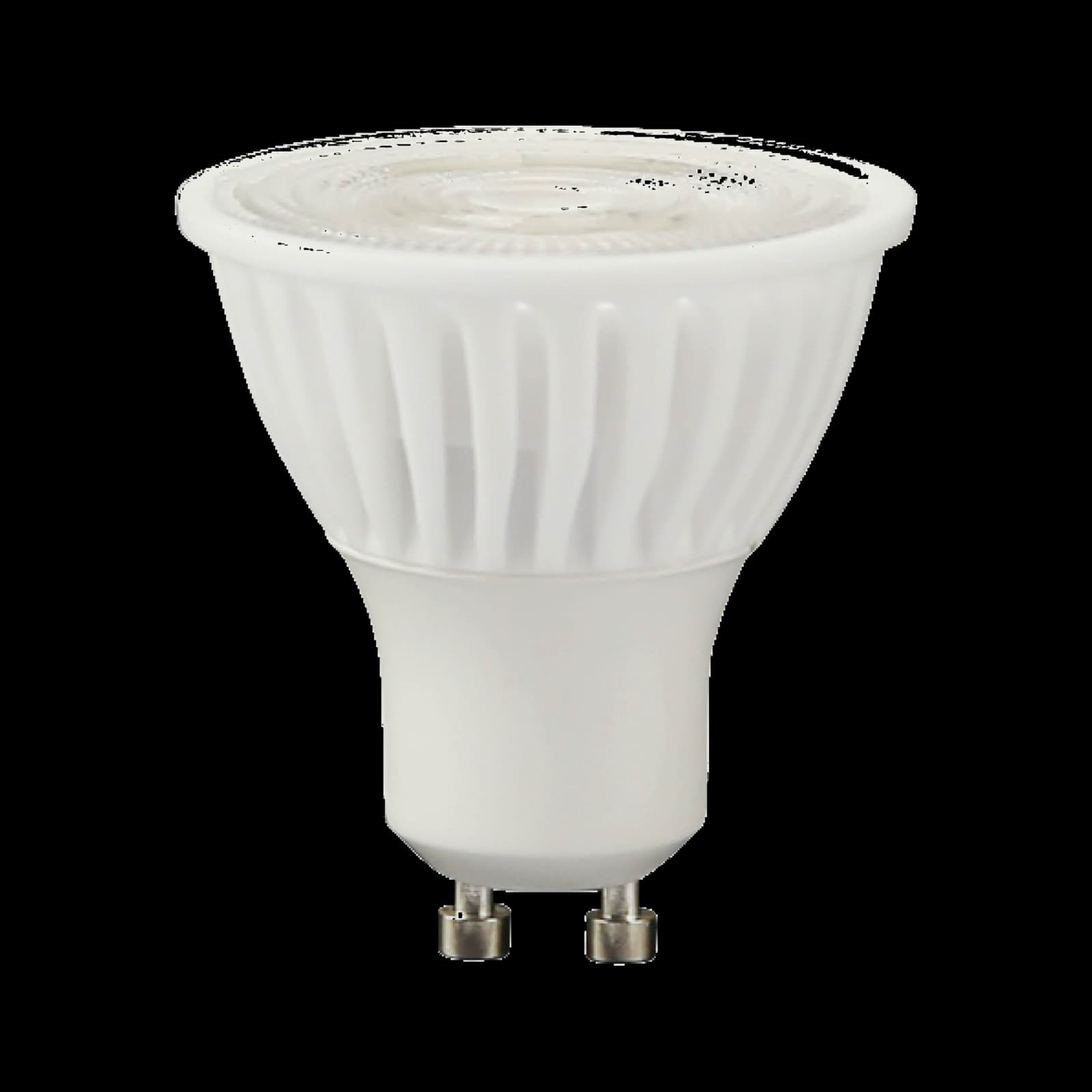
GU10 (twist-lock, two pins): Two short pins on the base, spaced about 10mm apart. Push into the socket and twist a quarter turn to lock. Found in downlights and track lights. The dominant socket for ceiling-mounted fixtures in Singapore.
E14 (small Edison screw, 14mm diameter): A smaller version of the E27. Same screw-in action, narrower base. Found in chandeliers, candelabra fittings, wall sconces, and some smaller table lamps.
If you are unsure, measure the screw base diameter. 27mm is E27. 14mm is E14. Two pins means GU10.
E27 — the standard screw fit
E27 is the universal socket. The E stands for Edison (the screw thread design) and 27 is the diameter in millimetres. If your lamp has a screw-in bulb, it is almost certainly E27 unless it is a small decorative fixture.
In Singapore homes, E27 appears in pendant lights (dining table, kitchen island), table lamps and floor lamps, ceiling-mounted globe fixtures, outdoor carriage lanterns, and many older HDB ceiling fittings. It is also the socket used in most utility spaces — bomb shelters, storerooms, and service yards.
LED replacement bulbs for E27 are widely available in Singapore, from hardware stores to online retailers. Standard shapes include the A60 (classic bulb shape), G95 and G125 (globe), and ST64 (filament Edison style). Wattages range from 3W (replacing a 25W incandescent) to 15W and above (replacing 100W).
Colour temperature options are the broadest in E27: 2700K, 3000K, 4000K, 5000K, and 6500K are all commonly stocked. CRI 80 is standard; CRI 90+ is available in premium ranges.
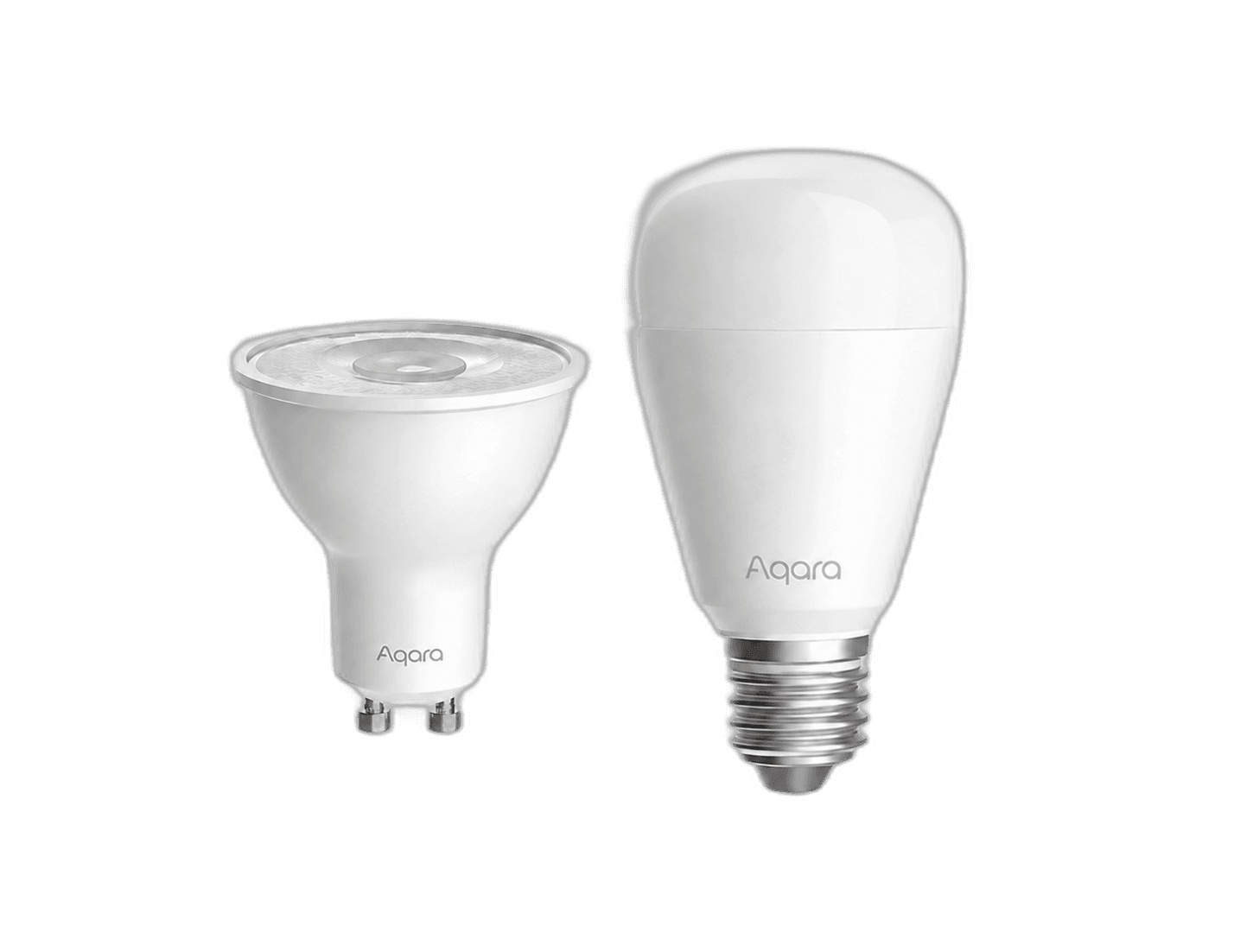
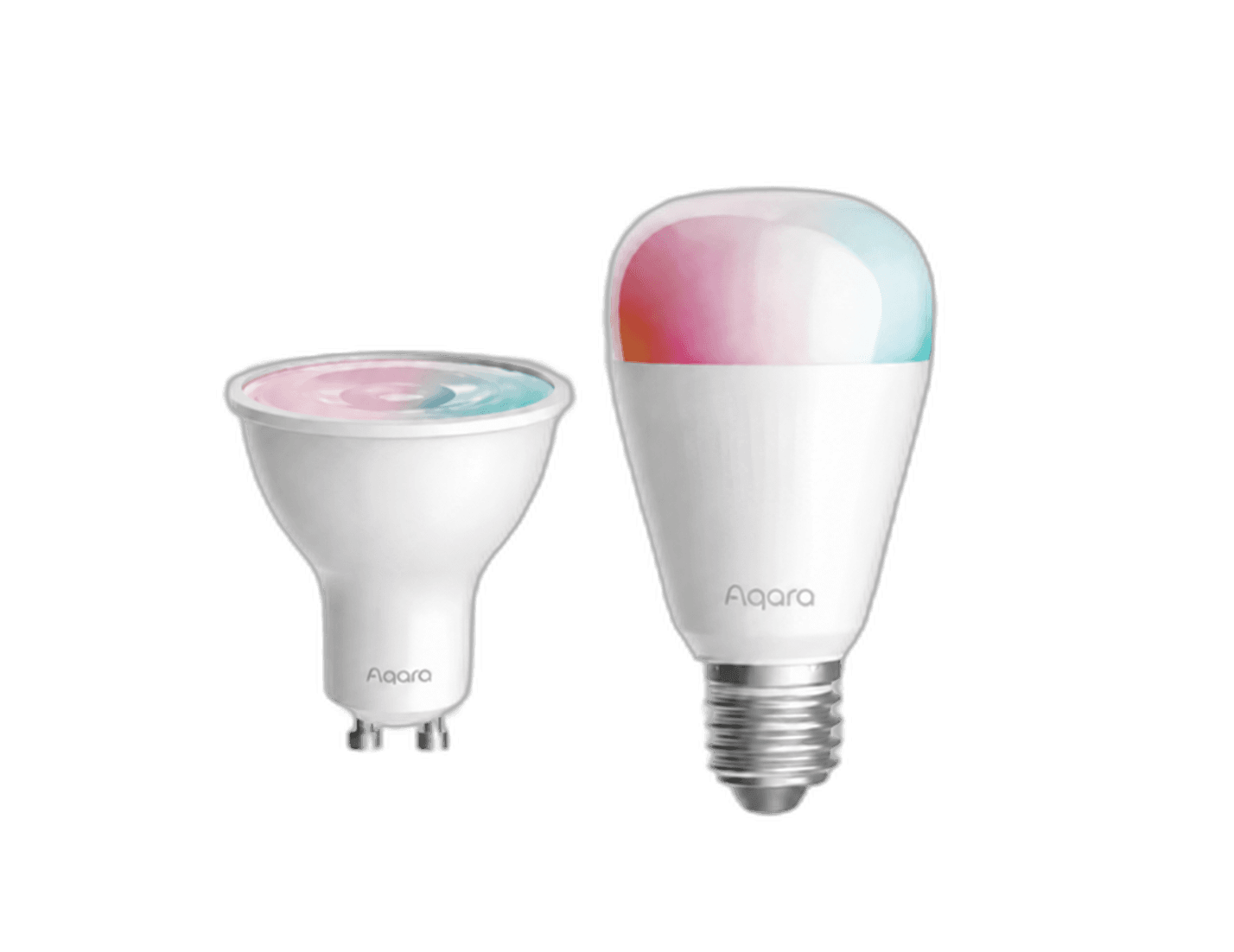
E27 smart bulbs are the most widely available smart lighting option — and one of the simplest upgrades for any Singapore home. A smart E27 bulb drops into your existing fixture with no rewiring. Most offer tunable white (2700–6500K), dimming, schedules, and voice control via Google Home, Alexa, or Apple Home. They are a low-commitment way to try smart lighting in a table lamp or pendant fixture.
E14 — the smaller screw fit
E14 uses the same screw thread as E27 but at 14mm diameter — roughly half the size. It is the standard socket for smaller, decorative fixtures where a full-size E27 bulb would look oversized.
In Singapore homes, E14 appears in chandeliers and candelabra fittings (the most common use), wall sconces and decorative wall lamps, smaller bedside table lamps, range hood lights, and fridge or oven bulbs (specialty E14 types rated for heat).
LED E14 bulbs come in candle (C35), small globe (G45), and filament styles. Wattages range from 3W to 8W — lower than E27 because the fixtures are typically smaller and do not need high output.
One limitation: the E14 range is narrower than E27 in Singapore stores. You will find fewer colour temperature options and fewer smart variants on the shelf. If you are renovating and choosing new fixtures, be aware that committing to E14 reduces your future bulb options compared to E27.
E14 smart bulbs do exist — tunable white, dimmable, app-controlled. Selection is smaller than E27, but if you have a chandelier you want to make smart, it is entirely achievable. Expect to pay slightly more per bulb than the equivalent E27 smart option.
GU10 — the twist-lock fit
GU10 is the dominant socket for downlights and track lights in Singapore. The two-pin twist-lock design makes changing bulbs fast — push in, twist a quarter turn, done. The GU stands for the pin style and 10 is the 10mm distance between pins.
Unlike E27 and E14, GU10 operates directly on 230V mains — no external transformer required. This simplifies installation and is a key reason it became the standard for Singapore ceiling fixtures. When your electrician installs recessed or surface mounted downlights, the socket behind the trim is almost always GU10.
GU10 LED bulbs come in a compact MR16 reflector shape. Key specifications to check before buying: beam angle (narrow 25 degrees for accent and spotlighting, medium 36 degrees for balanced throw, wide 60 degrees for general wash), colour temperature (3000K or 4000K are the most common choices), and CRI (90+ is worth the premium for living spaces).
Wattage options typically range from 3W (accent, 250 lumens) to 8W (bright general, 700+ lumens). Match the wattage to your spacing — if downlights are closely spaced (under 1m apart), lower wattage per bulb avoids an overly bright room.
GU10 smart bulbs are one of the most practical smart lighting upgrades available. If your HDB or condo already has recessed or track light GU10 sockets, swapping to a smart GU10 gives you tunable white, dimming, scheduling, and app control — no new fixtures, no electrician, just a bulb change. It is the cheapest way to make an existing ceiling smart without any installation work.
Other sockets: B22 and MR16
Two other sockets appear in Singapore homes, though less commonly.
B22 (bayonet cap, 22mm): A push-and-twist fitting with two spring-loaded pins on the side. It was the British colonial standard and still appears in some older Singapore properties and imported fixtures. LED B22 bulbs are available but the range is smaller than E27. If you are renovating and replacing B22 fixtures, switching to E27 fittings is worth considering for broader future bulb choice.
MR16 / GU5.3 (two thin pins, 12V): A low-voltage halogen replacement. Unlike GU10, MR16 runs on 12V DC and requires an external transformer. If your existing downlights have MR16 sockets, you can buy LED MR16 replacements, but check transformer compatibility — some older halogen transformers do not work well with LED loads. Upgrading the transformer or converting to GU10 fixtures solves this permanently.
Which socket for which fixture
Pendant light (dining, kitchen): E27 most common. Occasionally E14 for small decorative pendants. Recessed downlight: GU10 (standard in Singapore new builds). Surface mounted downlight: GU10 or integrated LED (no replaceable bulb). Track light head: GU10 (standard track) or integrated LED (magnetic track). Chandelier: E14 (candelabra base). Wall sconce: E14 or E27 depending on fixture size. Table lamp: E27 (large) or E14 (small decorative). Floor lamp: E27. Outdoor lantern: E27. Range hood light: E14 (small specialty). Ceiling fan light: E27 or E14 depending on fan model.
When buying replacement bulbs, always check the dead bulb's base before shopping. If in doubt, bring the old bulb to the store.
LED wattage equivalents
When replacing old incandescent or halogen bulbs with LED, use this conversion as a starting guide: 25W incandescent equals roughly 3W LED (about 250 lumens). 40W incandescent equals 5W LED (about 470 lumens). 60W incandescent equals 8W LED (about 800 lumens). 75W incandescent equals 10W LED (about 1,050 lumens). 100W incandescent equals 13W LED (about 1,500 lumens). 50W halogen GU10 equals 5–6W LED GU10 (about 400 lumens).
These are approximate — actual brightness depends on the specific bulb model. For accurate comparison, always check the lumen rating on the box rather than relying on wattage alone. A 7W LED from one brand might output 600 lumens while another produces 700.
Lumens measure brightness. Watts measure energy consumption. The LED advantage is the same brightness (lumens) at a fraction of the energy (watts). When in doubt, choose by lumens, not watts.
Frequently asked questions
Can I convert E27 to GU10 or vice versa? Adapters exist but are not recommended for permanent installations. They add bulk, may not fit inside the fixture housing, and can create safety concerns. If you need a different socket, it is better to change the fixture.
Is GU10 the same as MR16? No. GU10 is 230V mains voltage with thicker pins spaced 10mm apart. MR16 (GU5.3) is 12V with thinner pins spaced 5.3mm apart. They are physically different and not interchangeable.
What bulb does my HDB downlight use? If your HDB was built or renovated in the last 10 years, it is almost certainly GU10. Older installations may use MR16. Check by twisting the bulb out and looking at the base.
Can I use a smart bulb in any fitting? Yes, as long as the socket type matches. Smart E27 fits any E27 socket. Smart GU10 fits any GU10 socket. No rewiring needed.