LED Strip Lighting: Installation Guide for Beginners
Everything you need to know before cutting your first strip.
Shopping for led strips? See prices and specs, or send us your floor plan.
What you need
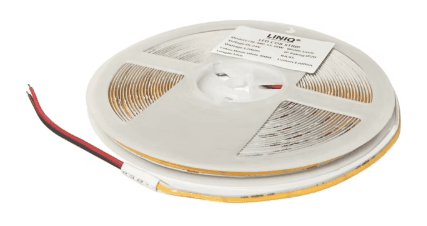
An LED strip (sold by the metre or in 5m reels). A compatible LED driver (power supply) matched to the strip's voltage and total wattage. An aluminium profile with diffuser (optional but recommended). Wire connectors or a soldering iron for joins. A dimmer or smart controller if you want dimming. Mounting clips or the strip's adhesive backing for installation.
Choosing your strip
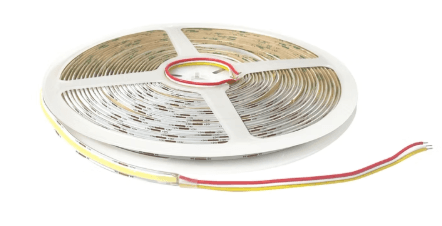
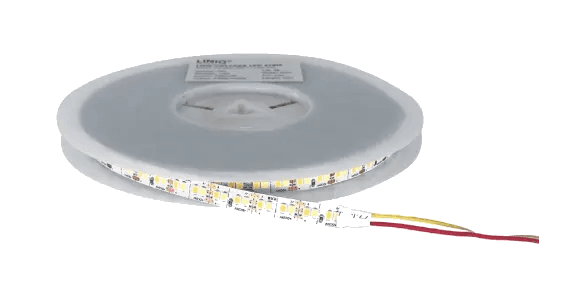
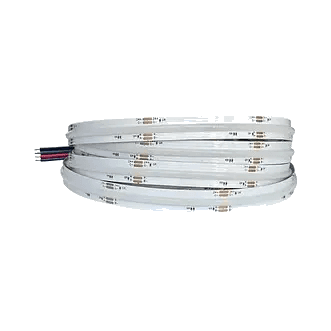
Voltage: 12V or 24V DC. 24V strips handle longer runs with less voltage drop. LED density: 60 LEDs/m is standard. 120 LEDs/m gives a smoother, dot-free line. 240 LEDs/m is premium, virtually seamless. Colour: single-colour (warm white, neutral, daylight) or RGBW for colour-changing. CRI: 90+ for areas where colour accuracy matters (kitchens, bathrooms). IP rating: IP20 for dry indoor, IP65 for wet areas.
Calculating your driver
Multiply the strip's wattage per metre by the total length. A 10W/m strip running 4 metres needs a 40W driver. Add 20% headroom, so use a 50W driver. Undersizing the driver causes flickering and premature failure. Oversizing slightly is fine and extends the driver's life.
Cutting and connecting
LED strips have marked cut points, usually every 3 LEDs (about 50mm). Cut only at these marks with sharp scissors. To rejoin cut sections, use solderless clip connectors (faster, less reliable) or solder the pads directly (more permanent, more reliable). For corners, use flexible connectors or short wire bridges.
Mounting
Aluminium profiles are the professional way. The strip sits inside the channel, the diffuser clips on top, and the whole assembly screws or sticks to the surface. Benefits: hides the LED dots, improves heat dissipation (extends lifespan by 30–50%), and protects the strip from damage. For quick installations, the adhesive backing on most strips works on clean, dry surfaces, but profiles are always worth the extra effort.
Avoiding common problems
Voltage drop: on long runs, the far end of the strip dims noticeably. Fix by powering from both ends or using a higher-voltage (24V) strip. Hot spots at connectors: ensure solid electrical contact at every join. Colour inconsistency: buy all your strip from the same batch, since LED bins can vary between production runs. Adhesive failure: the 3M backing on most strips degrades in heat. Use profiles or mechanical clips for permanent installations.
Where to hide the driver
The driver is a small box (about the size of a deck of cards for residential wattages) that converts 240V AC to 12/24V DC. It needs to be accessible for replacement, as drivers typically last 3–5 years. Common hiding spots: inside false ceiling voids, inside cabinet carcasses, behind kick panels, or in a nearby storeroom with cables routed through the wall. Plan this before you close up the ceiling.