LED Strip vs Cove Lighting — Singapore HDB Guide
LED strip and cove lighting compared for Singapore homes. When to choose which, cost ranges, smart options, and how to combine them.
Shopping for led strips? See prices and specs, or send us your floor plan.
The confusion between LED strips and cove lighting
Should I get LED strips or cove lighting? It is one of the most common lighting questions Singapore homeowners ask during renovation — and it is based on a misunderstanding. A cove light is not an alternative to an LED strip. A cove light is an LED strip, hidden inside a recessed ceiling ledge so the light bounces off the ceiling and the source is invisible. The real question is: should you install your LED strip exposed (under a cabinet, behind a TV, along a shelf) or concealed inside a built cove? The answer depends on your budget, your ceiling type, whether you are renovating or retrofitting, and how you want the light to look. This guide breaks down the practical differences for Singapore HDB and condo homes — including where smart LED strips fit into both options.
Quick summary
Bare LED strip: affordable, visible or semi-concealed, sticks to any surface, installs in minutes, no renovation required. Best for under-cabinet, behind-TV, display shelves, staircases, and wardrobe interiors.
Cove lighting: the LED strip is hidden inside a recessed ceiling ledge or L-box, producing soft indirect light bounced off the ceiling. Premium ambient effect, requires a false ceiling or bulkhead, installed during renovation. Best for living room ambient, dining area mood, and bedroom perimeter glow.
Both use the same LED strip technology. The difference is installation style and what you see (or do not see) when you look up.
What each one is
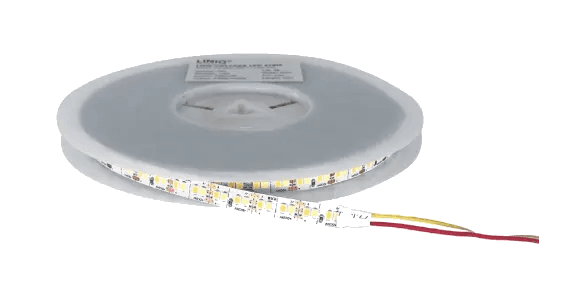
A bare LED strip is a flexible circuit board with surface-mounted LEDs, backed with adhesive tape. You peel the backing and stick it to any clean, dry surface. The strip itself is visible (or semi-concealed behind a lip or inside a channel). Common installations in Singapore homes include under kitchen cabinets for task lighting, behind TV consoles for ambient backlight, inside wardrobe and display shelves, along staircase treads or risers, and under bathroom vanity units.
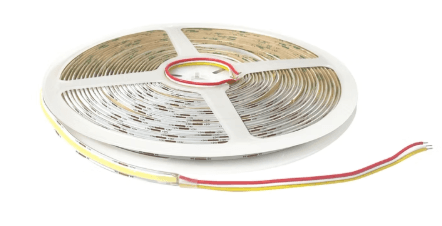
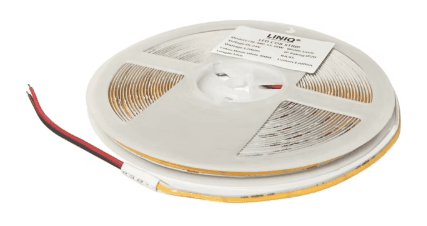
Bare strips work with or without an aluminium profile. The profile (a small channel with a diffuser cover) hides the LED dots and protects the strip, but it is not structurally necessary. For visible installations, COB strips (continuous light, no dots) or an aluminium profile with a frosted diffuser give a much cleaner result than a raw SMD strip.
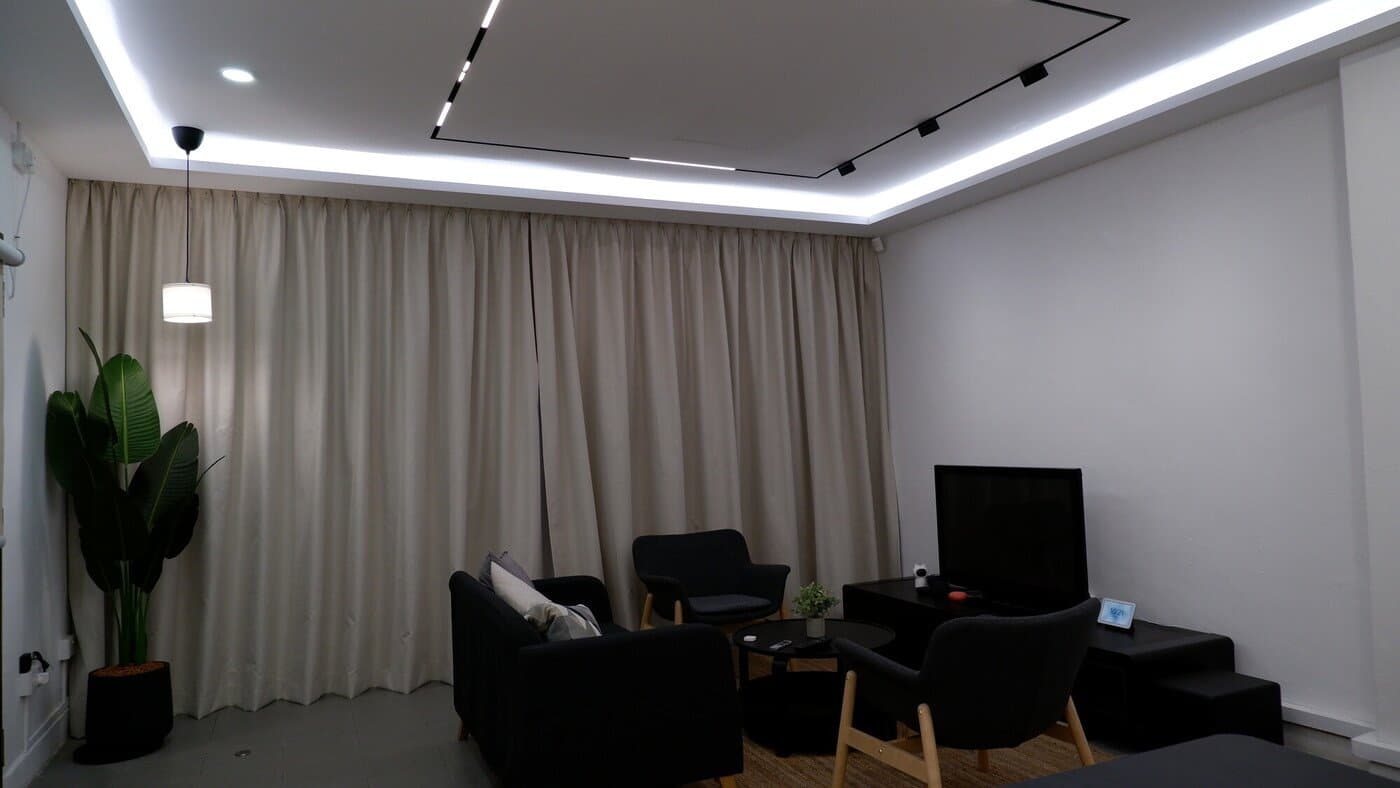
Cove lighting uses the exact same LED strip — but the strip is hidden inside a recess built into the ceiling. The most common setup in Singapore HDB and condo homes is an L-box or pelmet at the ceiling perimeter. The strip faces upward or toward the wall, and the light bounces off the ceiling surface, creating a soft, even ambient glow with no visible light source.
The ceiling recess is typically built from gypsum board or plaster during renovation. It adds 100–200mm of false ceiling depth along the perimeter where the cove runs. The strip sits inside the ledge, connected to a driver hidden above the false ceiling.
The key distinction: a bare strip is the product. Cove lighting is a construction method that uses a strip as its light source. You cannot buy cove lighting off the shelf — you buy an LED strip and build the cove around it.
Side-by-side comparison
Installation: Bare strip — adhesive mount, minutes. Cove — false ceiling or L-box construction, days. Visibility: Bare strip — visible or semi-concealed. Cove — light source hidden, only glow visible. Aesthetic: Bare strip — functional accent. Cove — premium ambient. Cost (materials only): Bare strip — $30–100 per run. Cove — same strip plus $500–2,000+ for false ceiling construction. Install time: Bare strip — under an hour. Cove — part of a renovation schedule. Renovation required: Bare strip — no. Cove — yes (false ceiling or bulkhead). Flexibility to change: Bare strip — peel off and reposition. Cove — fixed with the ceiling structure. Best for: Bare strip — task lighting, accent, renters. Cove — ambient perimeter lighting, new renovations.
When to use bare LED strips
Bare LED strips are the right choice when you do not have a false ceiling, do not want to build one, or need lighting in a specific spot that a ceiling fixture cannot reach.
Under-cabinet kitchen lighting is the most practical application. A warm white (3000K) or neutral (4000K) strip under your upper cabinets illuminates the countertop where you work. Install with an aluminium profile for a clean line, or stick directly under the cabinet lip where it is concealed from eye level.
Behind-TV backlight reduces eye strain during evening viewing and adds depth to the wall. A simple warm white strip or an RGB strip for colour ambience — either works.
Display shelves, cabinets, and wardrobes benefit from strips inside for visibility and accent. A short strip at the top of each shelf compartment eliminates shadows and makes the contents visible without overhead room light.
Staircase lighting uses strips along treads or under nosings for safety and ambient effect. IP20 is sufficient indoors; use IP65 if the stairs are near an entrance where shoes track moisture.
The rental-friendly factor is important in Singapore. If you are renting an HDB flat or condo, bare LED strips install with adhesive and remove without damage. No drilling, no wiring modifications, no landlord approval needed for temporary installations.
For any bare strip installation, use 24V strips for runs longer than 3 metres to avoid voltage drop and uneven brightness.
When to use cove lighting
Cove lighting makes sense when you are already building a false ceiling. If your renovation includes a false ceiling in the living room, dining area, or master bedroom — which most Singapore HDB renovations do — adding an LED strip inside a perimeter cove is a relatively low incremental cost.
The living room is where cove lighting has the most impact. A warm 3000K strip running the perimeter of an L-box creates a soft, even ambient glow that fills the room without any visible fixture. It is the lighting that makes guests say the space feels premium without being able to identify why. In a standard 4-room HDB living room, a full perimeter cove typically needs 10–15 metres of LED strip.
Dining areas benefit from cove lighting above the dining table zone, often combined with a pendant for direct task light over the table surface.
Bedrooms use cove lighting as a perimeter accent or a headboard pelmet — a horizontal recess above the headboard wall that washes the wall with soft light. This doubles as a reading backlight and an ambient scene layer.
The main cost is the false ceiling construction, not the strip itself. Budget $500–2,000+ for cove construction in a single room in Singapore, depending on complexity. The LED strip and driver are typically $50–150 additional. This is a renovation-stage decision — retrofitting a cove into an existing ceiling means cutting into gypsum and reinstating, which is rarely worthwhile unless you are already renovating.
Smart LED strips — the third option
Smart LED strips work for both bare and cove installations. The strip connects to your home WiFi or a Zigbee/Matter hub, giving you app control, voice control, dimming, tunable colour temperature, schedules, and scenes.
For cove lighting, smart control adds genuine value: schedule a warm dim glow at sunset that gradually fades to off at midnight. Shift from 3000K relaxation mode to 4000K task mode when working from home. Set different scenes for different activities without touching a wall switch.
For bare strip installations (behind TV, under cabinets), smart adds colour and mood control that a fixed strip cannot match.
When choosing a smart strip, look for Matter compatibility — it works across Apple Home, Google Home, and Alexa and is the safest bet for long-term ecosystem flexibility. Check that the app supports tunable white (not just on/off dimming). Confirm the strip voltage matches your existing driver if retrofitting.
Can you combine them?
Most well-designed Singapore homes use both. A typical setup might include cove lighting in the living room ceiling for ambient perimeter glow, bare LED strips under kitchen cabinets for task lighting, a bare strip behind the TV console for backlight, and a bare strip inside the master bedroom wardrobe for visibility.
Each serves a different role. The cove provides the ambient layer — the soft background illumination that sets the room's mood. Bare strips handle task and accent roles — focused lighting in specific spots where you need visibility.
You can run all of them on a single smart controller if they share the same driver circuit, or use separate drivers for each zone. Separate zones give you independent control — kitchen strips on while living room cove is dimmed, for example.
The combined result is layered lighting without visible fixtures: light appears to come from the architecture itself.
HDB cove lighting specifics
In a standard 4-room HDB flat, the most common cove positions are the living room perimeter (L-box along 2–3 walls), the master bedroom headboard wall (horizontal pelmet), and the dining area (partial L-box or floating ceiling feature).
False ceiling depth for cove lighting is typically 150–200mm. This reduces your ceiling height from the standard HDB 2.6m to about 2.4m in the cove area. Discuss this with your interior designer early — in rooms with low furniture, the reduced height is barely noticeable, but in small rooms with tall cabinets it can feel cramped.
Colour temperature for cove lighting in Singapore homes is overwhelmingly 3000K warm white. It produces the soft ambient effect that most homeowners want.
LED strip choice for cove installations: COB strips are now the recommendation. The seamless, dot-free output looks better bounced off a ceiling than SMD strips, which can produce visible hotspots.
Frequently asked questions
Can you install cove lighting in an HDB? Yes — cove lighting requires a false ceiling or L-box, which is a standard renovation item for HDB flats. Your interior designer or contractor builds the cove and an electrician wires the LED strip and driver.
How much does cove lighting cost in Singapore? The LED strip and driver cost $50–150 per zone. The false ceiling construction costs $500–2,000+ per room depending on length and complexity. Total for a living room cove in a 4-room HDB: roughly $800–2,500 installed.
Do LED strips need a transformer? Yes — LED strips run on 12V or 24V DC and need a driver to convert from 230V mains. Size the driver at 120% of the strip's total wattage.
Smart LED strip vs regular — is it worth it? For cove lighting in the living room or bedroom, yes — scheduling and tunable colour temperature add real daily value. For a wardrobe interior strip, regular is fine.