Magnetic Track Lights vs Traditional Track Lights — Which Is Right for Your Home?
A comprehensive comparison of magnetic and traditional track lighting systems, with Singapore-specific pricing, installation tips, and room recommendations.
Shopping for track lights? See prices and specs, or send us your floor plan.
Two systems, very different technology
Choosing between magnetic and traditional track lighting is one of the most common decisions during a Singapore renovation. Both mount to your ceiling and let you direct light where you need it — but they work very differently under the hood. This guide breaks down how each system works, what they cost, and which one makes sense for your space.
What are magnetic track lights?
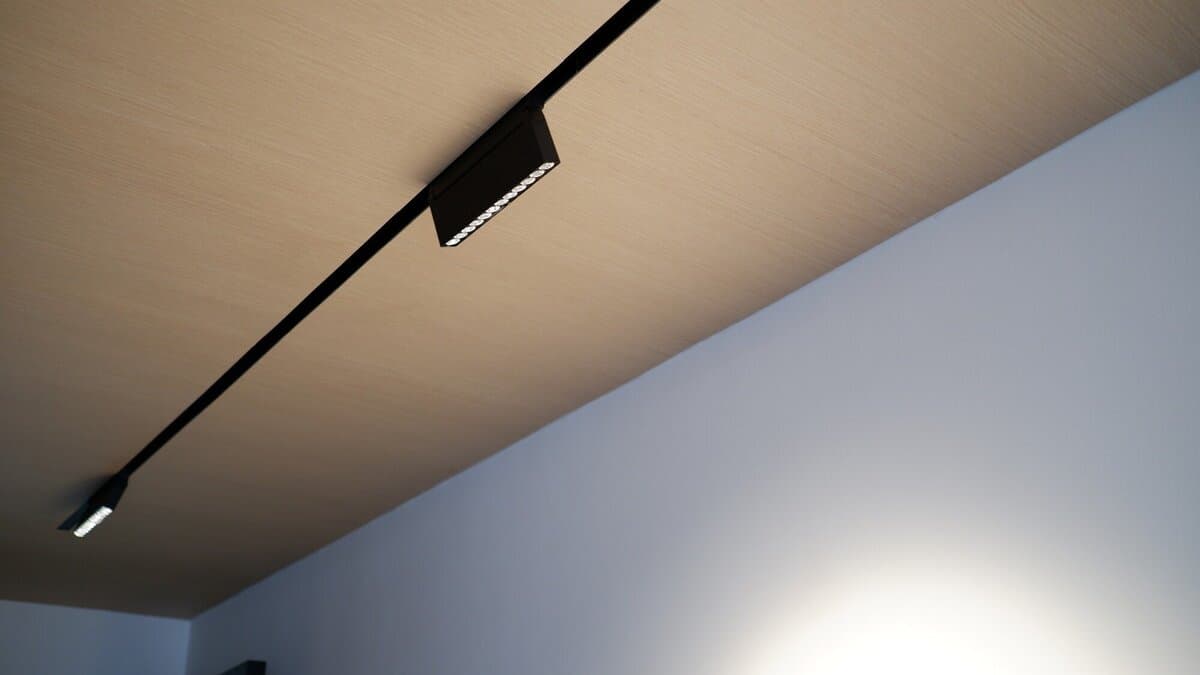
Magnetic track lights use a slim aluminium rail with embedded copper conductors carrying 48V DC power. Inside the track, steel strips provide a magnetic attachment surface. Fixtures have strong neodymium magnets in their base — snap one onto the track and it locks into place and powers up instantly. No tools, no twisting, no electrician needed for fixture changes.
How magnetic tracks are powered
A driver (transformer) converts your home's 230V AC mains power to safe 48V DC. Drivers come in 100W, 150W, 200W, and 350W capacities, and you can connect multiple track segments into L-shapes, T-shapes, or parallel runs. Track profiles come in standard widths — M15 (15mm, residential), M20 (20mm, most popular), and M35 (35mm, commercial). Standard lengths are 1m, 2m, and 3m segments.
Magnetic track fixture types
This is where magnetic tracks pull ahead. You're not limited to spotlights — the system supports linear bar lights, grille lights, wall washers, and even pendant drops. All use integrated LED modules and support smart dimming via DALI, 0-10V, Bluetooth, Zigbee, or Wi-Fi.
What are traditional track lights?
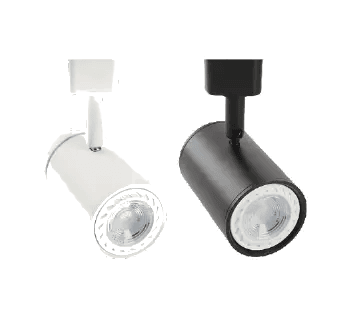
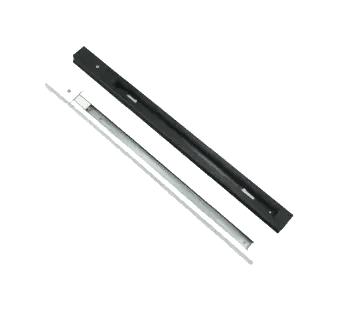
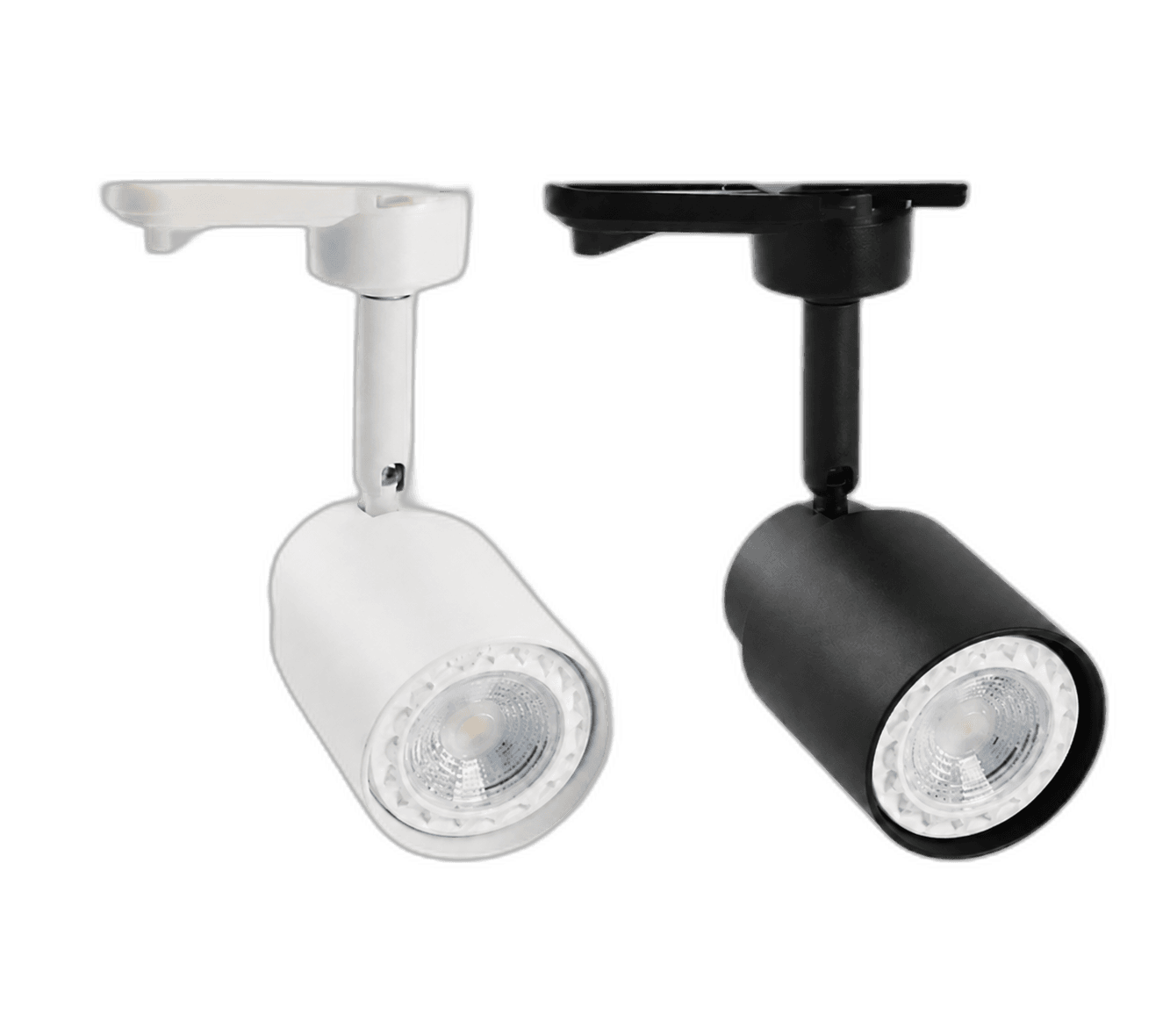
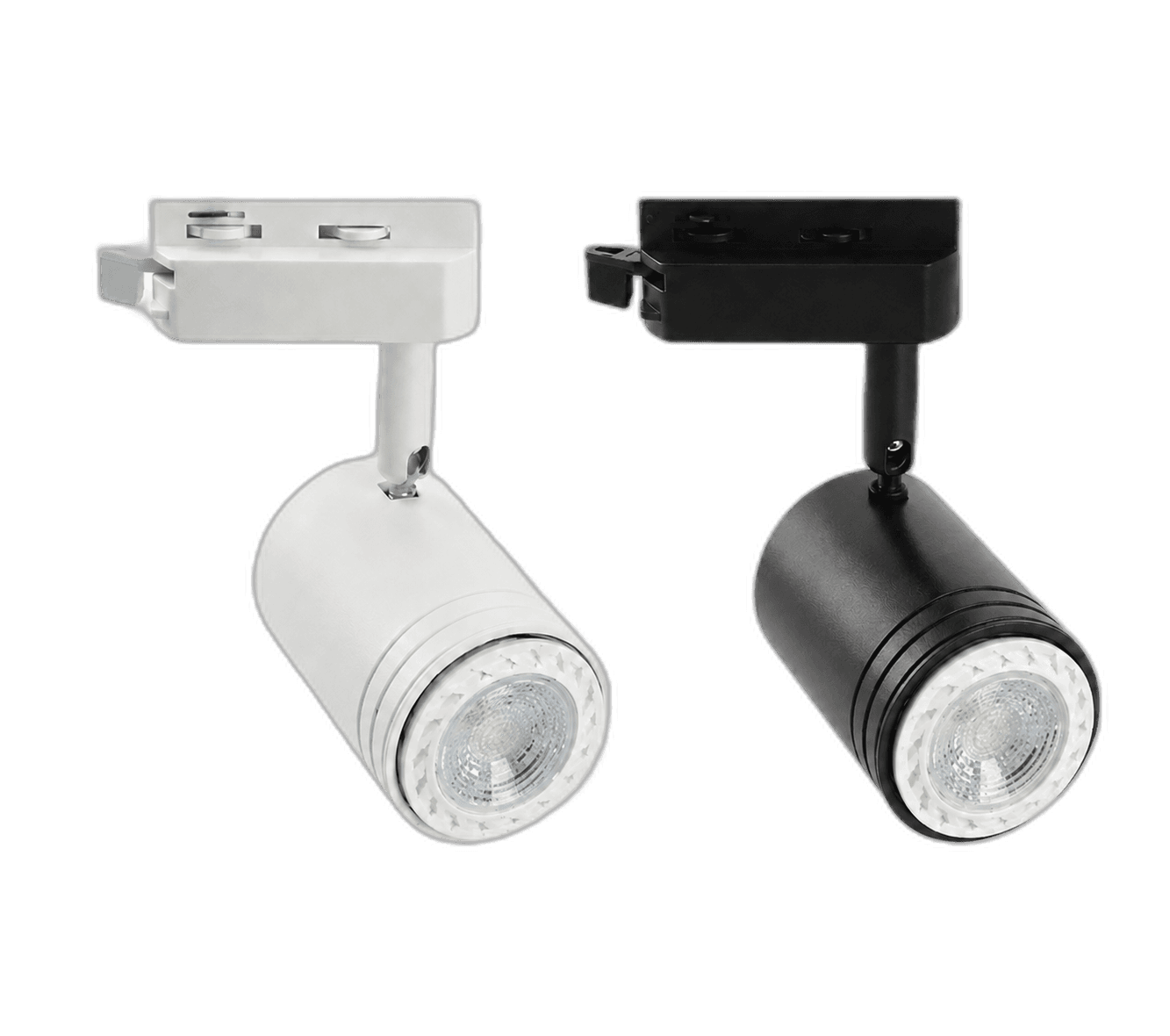
Traditional track lights use a metal or plastic track (H-type, J-type, or L-type profile) with exposed copper conductors carrying 230V AC mains voltage directly. Fixtures insert into the track and twist to lock — a mechanical connection that holds the fixture in place and completes the electrical circuit. The main fixture type is spotlights with standard GU10 or E27 bulb sockets. The advantage here is simplicity: bulbs are replaceable, widely available, and interchangeable across brands. If a bulb dies, you swap it for a few dollars — no need to replace the entire fixture. Traditional track lighting needs no driver or transformer. The track connects directly to your home's wiring, making installation straightforward for any licensed electrician.
Flexibility and aesthetics
Magnetic fixtures snap on and slide freely along the track — rearranging your lighting takes seconds, no tools needed. Traditional fixtures twist-lock into fixed positions and are harder to reposition. Visually, magnetic profiles are ultra-slim and nearly invisible once installed. Traditional tracks are bulkier with more visible hardware, which can work for industrial aesthetics but looks dated in minimalist spaces.
Maintenance and bulb replacement
Traditional track lights use standard GU10 or E27 bulbs. When one dies, you swap it for a few dollars at any lighting shop. Magnetic fixtures use integrated LED modules — when the LED eventually fails (typically 50,000+ hours), you replace the entire fixture. The trade-off: magnetic LEDs last much longer and are more energy efficient (up to 110 lm/W vs 90–100 lm/W for traditional), but you can't just change a bulb.
Dimming and smart control
Magnetic tracks support system-level dimming via DALI, 0-10V, Bluetooth, Zigbee, and Wi-Fi — making them far more compatible with smart home setups. Traditional tracks are limited to TRIAC dimmers or swapping in individual smart bulbs like Philips Hue GU10s.
Safety
Magnetic tracks run on 48V DC, classified as Safety Extra-Low Voltage (SELV). You can touch the track with the power on without risk of shock. Traditional tracks carry 230V AC mains voltage — a shock hazard if the track is exposed or damaged.
A note on compatibility
Magnetic track fixtures are proprietary. A fixture from one manufacturer generally will not fit another's track. Once you choose a brand, you're committed to that ecosystem. Traditional track lights don't have this problem — fixtures are largely interchangeable across brands. This is a critical consideration when making your decision.
Living room
Both systems work well here, but magnetic track lighting has the edge for modern, minimalist interiors. The slim profile disappears into the ceiling, and you can mix spotlights with linear bars for layered lighting. If your living room doubles as a display space for art or shelving, magnetic spotlights give you precise directional control that's easy to adjust as you rearrange. Traditional track lights are perfectly functional on a tighter budget. A 4-head setup on a 1.5m track provides solid general illumination.
Kitchen
Kitchens benefit from the flexibility of magnetic tracks. You can combine bright linear fixtures over the island or counter with spotlights directed at prep areas. The 48V system is also safer around wet areas — though neither type is rated for direct water exposure.
Bedroom
Magnetic tracks work well here. Low-profile recessed tracks with warm 2700K fixtures create a hotel-like ambiance. Dimming support via smart home integration lets you set the mood without reaching for a wall switch.
Study or home office
Traditional track lights with 4000K cool white GU10 bulbs are a practical, cost-effective choice for a study. If you want smart control or plan to reconfigure your desk layout, magnetic tracks give you more future flexibility.
Installation in Singapore: HDB and BTO flats
Standard HDB ceiling height is 2.6m. If you opt for a false ceiling, HDB requires a minimum finished height of 2.4m — leaving 10–20cm of ceiling void to work with. Surface-mounted track lights (both magnetic and traditional) are the most popular choice for BTO and resale HDB flats. They mount directly to the concrete ceiling using anchors and need only a single electrical point — making them ideal for new BTOs that come with fixed lighting points. Recessed magnetic tracks need 5–7cm of clearance in the ceiling void. This fits within a standard false ceiling, but leaves less room for aircon ducting or other services. Plan your false ceiling layout with your contractor and electrician together. No false ceiling? Surface-mounted magnetic track or suspended/pendant-style track are both options that work on bare concrete ceilings.
Installation in Singapore: condos
Interior renovations — including ceiling and lighting work — require MCST approval before work begins. Submit your renovation application with contractor details and floor plans. Approval typically takes 5–10 working days, and expect a refundable deposit of $500–$1,000. No specific restrictions on track lighting type, but check with your MCST for building-specific rules.
Electrician requirements and voltage
All electrical work in Singapore must be done by a licensed electrician — this applies to the initial track installation and wiring for both systems. For magnetic tracks, subsequent fixture changes (snapping on and off) are DIY. Singapore uses 230V/50Hz mains. If you're sourcing fixtures from overseas, make sure they're rated for 220–240V.
Humidity and IP ratings
Most magnetic tracks carry an IP20 rating — not moisture-protected. They're fine for air-conditioned indoor spaces, but avoid installing them in bathrooms, balconies, or other damp areas. Singapore's humidity can corrode contacts and weaken magnetic connections over time in unprotected environments.
Traditional track lighting costs
Track rail (1m) costs $9–$12. Connectors (L, T, X shapes) run $5–$9. Basic GU10 spotlight fixtures are $25–$40 each. A typical 4-head setup with a 1.5m track costs $120–$200 for fixtures alone.
Magnetic track lighting costs
Surface-mount track rail (1m) costs $24–$72. Connectors run about $28. A 150W driver is around $149. Spotlight fixtures cost $38–$68 each, linear or grille fixtures $48–$108 each. A typical 4-head setup with a 1m track, driver, and fixtures runs $350–$700.
Installation and total cost
Electrician rates for track lighting in Singapore are $50–$60 for the first light point and $30–$40 for each additional point. Recessed magnetic track costs more due to false ceiling coordination. All in, a traditional setup for one room runs $200–$400. A comparable magnetic setup costs $500–$1,000+. The gap narrows over time — magnetic systems use less energy and the LEDs last significantly longer.
Can I install magnetic track lights without a false ceiling?
Yes. Surface-mounted and suspended options are available. Only recessed installation requires a false ceiling.
Are magnetic track lights safe for homes with children?
Very safe. The 48V DC system is classified as Safety Extra-Low Voltage (SELV) — it's harmless to touch, even during installation.
How many fixtures can I put on one magnetic track?
It depends on your driver capacity. A 200W driver with 10W fixtures theoretically supports 20 fixtures, but leave 15–20% headroom — so around 16 fixtures practically.
What happens if the magnetic track driver fails?
All fixtures on that driver's circuit go dark until it's replaced. Traditional track fixtures are independent — one failing doesn't affect others. Consider this when designing your layout.
Can I replace the LED in a magnetic track fixture?
Usually not. Magnetic fixtures use integrated LEDs. When the LED reaches end of life (typically 50,000+ hours, or around 11 years at 12 hours daily use), you replace the entire fixture module.
Which is better for HDB BTO on a budget?
Traditional track lights offer better value for budget-conscious BTO owners mounting on concrete ceilings. Magnetic track lighting is worth the premium if you prioritise a sleek, modern look and want the flexibility to reconfigure your lighting layout over time.