Track Light vs Downlight: Which for HDB Ceilings?
Choosing between track lights and downlights for your HDB or condo ceiling? Installation, flexibility, cost, and when to combine both.
Shopping for track lights? See prices and specs, or send us your floor plan.
The ceiling lighting decision
You are renovating your HDB or condo and your contractor asks: track lights or downlights? It is one of the most consequential lighting decisions in the renovation because it determines how your ceiling looks, how much flexibility you have later, and in many cases, whether you need a false ceiling at all. Both are excellent options — most well-designed Singapore homes use a combination. But the choice depends on your ceiling type, room function, and how much you value the ability to reconfigure later. This guide gives you the direct comparison: when to choose downlights, when to choose track lights, when to use both, and what smart variants add to each. If you are mid-renovation and need a clear answer, start with the comparison table below.
Quick answer
Downlights are best for clean, even ambient lighting in rooms with false ceilings — bedrooms, bathrooms, corridors. Track lights are best for directional, adjustable lighting and rooms without false ceilings — living rooms, kitchens, feature walls. Most well-designed HDB and condo homes use both: downlights for the ambient base layer and track lights for accent and focal lighting. If you are on a tight budget and can only pick one system for the whole flat, track lights offer more flexibility for the money. If you have already committed to a false ceiling, recessed downlights give the cleanest look.
Side-by-side comparison
Installation: Downlights — recessed into false ceiling (cutout required). Track lights — surface-mounted to ceiling, no false ceiling needed. Ceiling type required: Downlights — false ceiling mandatory for recessed. Track lights — works on concrete, plaster, or false ceiling. Flexibility: Downlights — fixed position, cannot move after installation. Track lights — heads adjustable and repositionable along the rail. Aesthetics: Downlights — flush, minimal, invisible. Track lights — visible fixture, industrial or modern character. Bulb replacement: Downlights — GU10 twist-lock, easy. Track lights — GU10 for standard track, integrated LED for magnetic. Best use: Downlights — ambient general lighting. Track lights — accent, focal, directional. Rough cost per point: Downlights — $15–40 per fixture plus false ceiling cost. Track lights — $20–60 per head, no false ceiling needed.
When to pick downlights
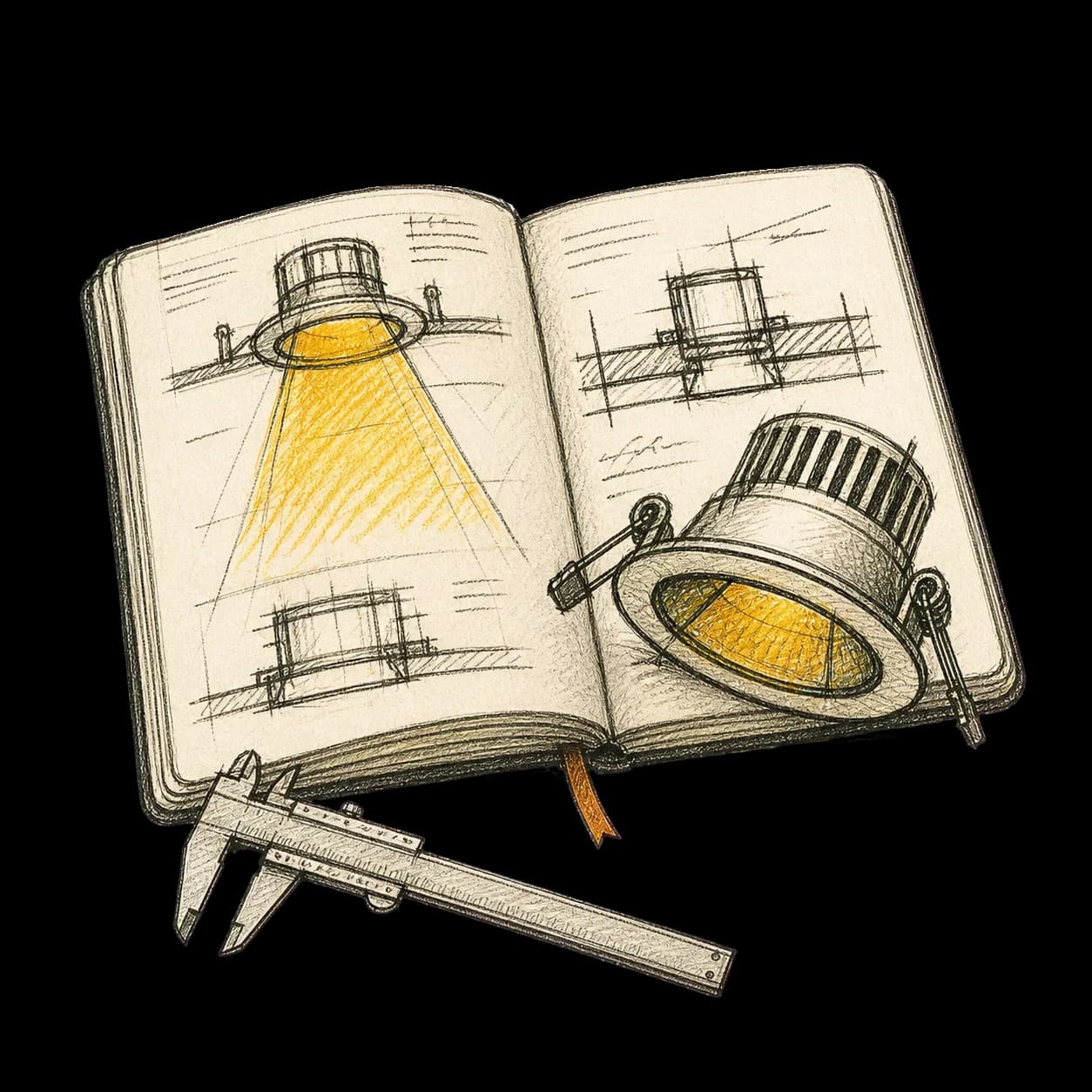
Downlights are the right choice when you want the ceiling to disappear. Recessed downlights sit flush inside the false ceiling with only the trim ring visible — no protruding fixture, no hardware, no visual weight. For homeowners who want a clean, minimal look, downlights are the standard.
In Singapore HDB flats, downlights make the most sense in bedrooms (where a simple, even ceiling wash and a calm atmosphere are the priority), bathrooms (IP44-rated downlights for wet areas, positioned above the mirror and shower), corridors (a line of recessed downlights creates an even, navigable walkway), and kitchens (general ceiling illumination, often paired with under-cabinet strips for task light).
False ceiling is the main prerequisite. Recessed downlights need a cavity above them (70–120mm depth) to house the fixture body. If you are already building a false ceiling for other reasons (concealing wiring, adding cove lighting, creating ceiling features), adding downlights is straightforward. If you do not want a false ceiling, surface mounted downlights are an alternative, but track lights are usually the more popular choice for exposed ceilings.
Standard sizing in Singapore HDB homes: 75mm (3-inch) or 100mm (4-inch) cutout. Space them 1–1.2m apart for even coverage. A typical 4-room HDB bedroom uses 3–4 downlights; a living room uses 4–6.
For the colour temperature and installation-type sub-decisions, our recessed vs surface mounted downlights guide covers the details.
When to pick track lights
Track lights make sense when you want directional control, a visible design element, or the ability to change your lighting layout after installation.
In Singapore homes, track lights are the top choice for living rooms (especially open-plan layouts where you need accent lighting on feature walls, TV consoles, or artwork), exposed or bare concrete ceilings (where recessed downlights are not possible without building a false ceiling), rooms that change function (a home office that doubles as a guest room benefits from repositionable heads), and retail-inspired aesthetics (the gallery-track look is a strong design trend in 2026 Singapore interiors).
Track lights install on the ceiling surface with screws — no false ceiling cutting, no cavity depth requirement. This makes them significantly faster and cheaper to install than recessed downlights when you factor in false ceiling construction costs.
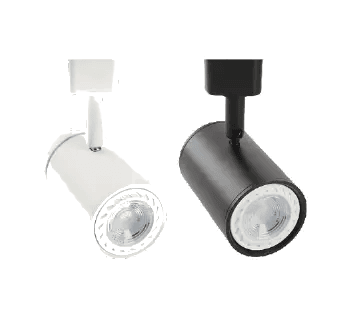
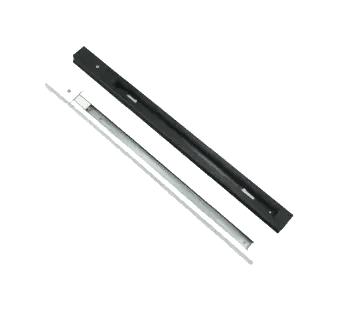
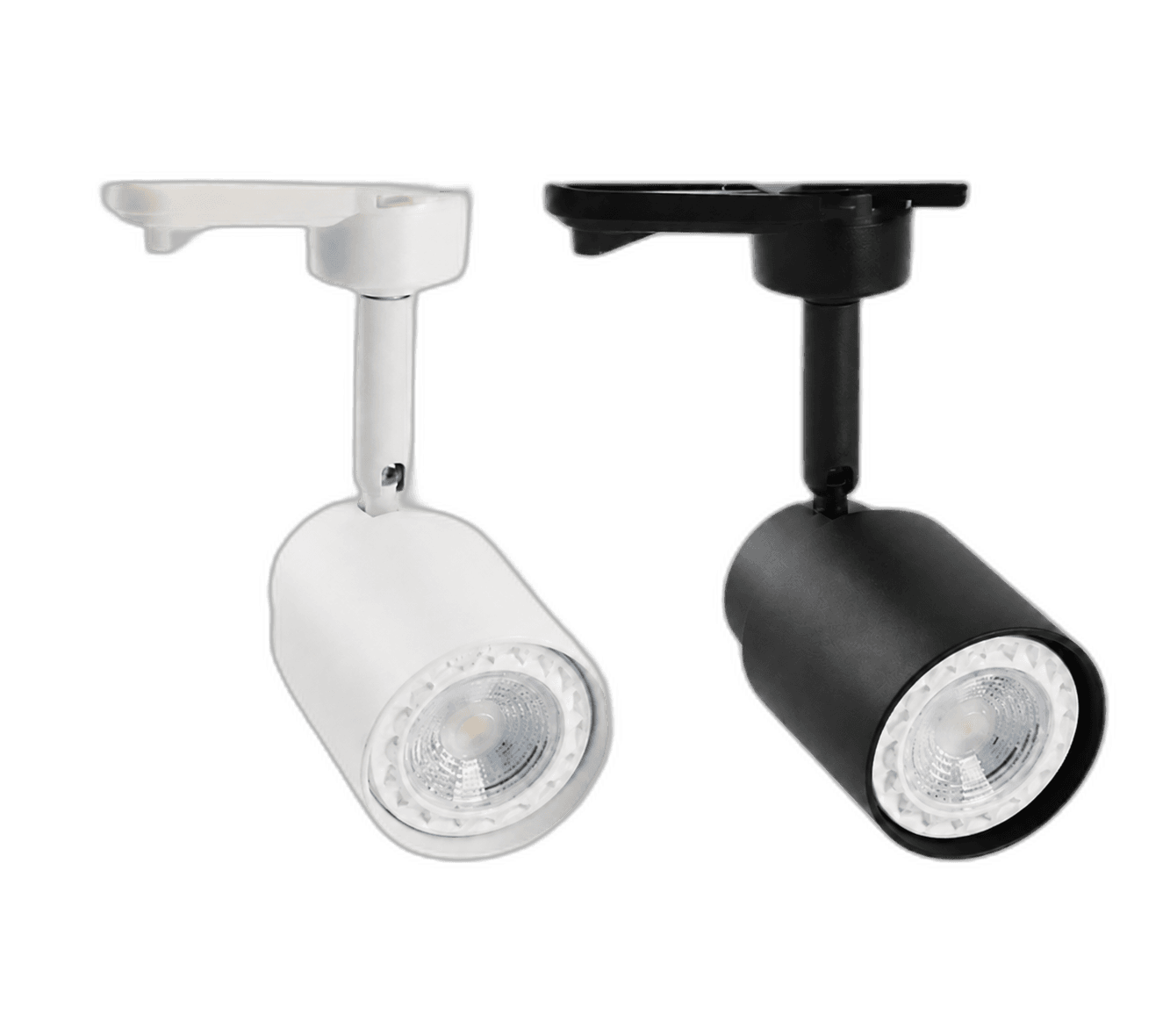
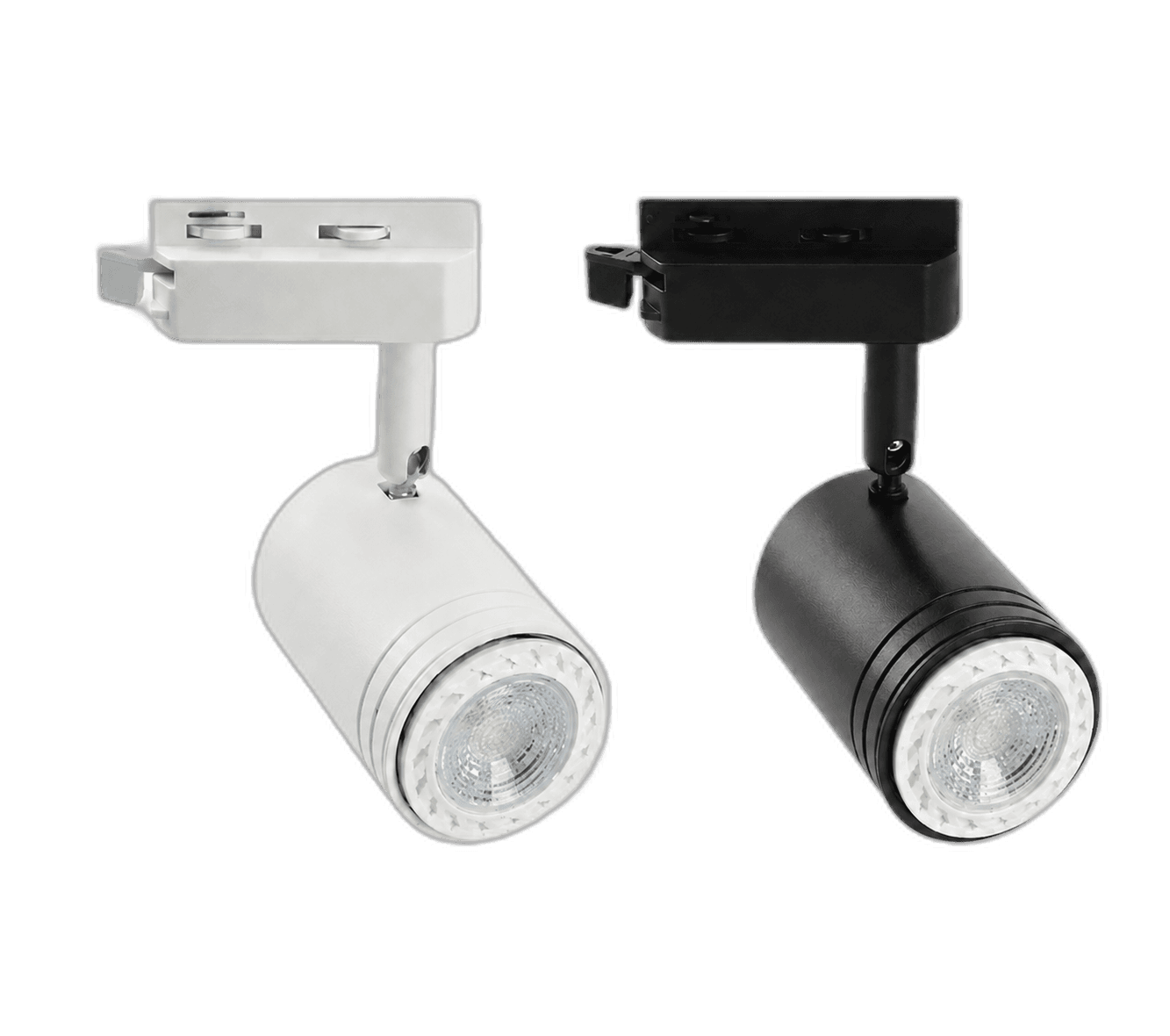
The two main systems: standard track (rail with GU10 heads) and magnetic track (low-voltage rail with snap-in LED modules). Standard track is more affordable and lets you swap bulbs. Magnetic track looks sleeker and allows instant reconfiguration but uses integrated LED modules — you cannot change the bulb, only the module.
For accent lighting, narrow-beam track heads (15–24 degrees) create focused pools on artwork, shelves, or feature walls. For general ambient lighting, wide-beam heads (36–60 degrees) spread light across the room. Most installations use a mix of both.
Head count per track depends on room size: a 1.5m track with 3–4 heads suits a typical HDB living room. Multiple tracks in parallel or L-shaped configurations cover larger open-plan spaces.
Can you combine them?
Yes — and that is the recommendation for most well-designed Singapore homes. The combination works because each type serves a different role.
Downlights provide the ambient base layer: even, general ceiling illumination across the room. Think of this as the house lights — the consistent, comfortable background brightness.
Track lights provide the accent and focal layer: directed beams on specific features. A track aimed at artwork, a bookshelf, or a feature wall adds depth and visual interest that flat downlight coverage cannot create.
A common setup in a 4-room HDB living room: 4–6 recessed downlights in a grid for ambient, plus one 1m or 1.5m track above the TV feature wall for accent. The downlights handle everyday lighting; the track adds architectural character.
In open-plan kitchen-living rooms, downlights work over the kitchen zone (where even task lighting matters) while track lights handle the living area (where directional accent and flexibility are more valuable).
The key is putting each system on a separate circuit and switch, so you can run one without the other. Track accent lighting alone at low output creates evening atmosphere. Downlights alone provides working brightness.
A note on smart variants
Both track lights and downlights come in smart variants — app or voice controlled, with tunable white, dimming, and scheduling.
For downlights, the simplest smart upgrade is swapping standard GU10 bulbs for smart GU10 bulbs. No new fixtures, no electrician. You get tunable colour temperature (shift between 3000K and 6500K), dimming, and app control. Useful in living rooms and bedrooms where lighting needs change between morning and evening.
For track lights, smart GU10 bulbs work in standard track heads. Magnetic track smart modules are available from some manufacturers with built-in WiFi or Zigbee connectivity.
The price premium for smart variants is roughly 30–80% over standard. It is worth the premium in living rooms and multipurpose rooms where you will use the tunability. In bathrooms, corridors, and utility spaces, standard fixed-temperature fixtures are more cost-effective — you would not adjust those lights often enough to justify the extra cost.
HDB-specific considerations
Most BTO flats arrive with concrete ceilings and basic lighting provisions (typically a single ceiling point per room with an E27 pendant holder). From this starting point:
If you are building a false ceiling: recessed downlights are the natural choice. Your contractor will plan the grid during the ceiling build. Standard installation includes wiring, cutouts, and fixture fitting as part of the ceiling package.
If you are keeping the concrete ceiling: track lights are the practical option. Surface-mount the track directly to concrete with appropriate anchors. No ceiling modification needed.
Mixed approach: build a partial false ceiling (perimeter L-box for cove lighting) and surface-mount track on the exposed centre. This is increasingly common in Singapore HDB living rooms — the perimeter cove provides ambient warmth while the central track provides directional accent.
Rental restrictions: if you are renting, check your tenancy agreement before drilling. Some landlords permit track light installation (minimal footprint, 2–3 anchor points per track). Recessed downlights are impractical in a rental because they modify the ceiling structure.
Electrician requirement: both track lights and downlights connect to mains electrical wiring and must be installed by a Licensed Electrical Worker in Singapore. Budget for this as part of your renovation electrician scope.
Frequently asked questions
Can I use track lights in an HDB without a false ceiling? Yes — track lights surface-mount directly to concrete or plaster ceilings with anchors. This is one of their main advantages over recessed downlights.
How many downlights do I need per room? Plan one downlight per 2–3 square metres. A 12 sqm living room: 4–6 downlights. A 9 sqm bedroom: 3–4. Kitchen: 3–4 plus under-cabinet strips.
Are track lights more expensive than downlights? Track fixtures cost slightly more per point, but you save on false ceiling construction. Overall, a track system on a bare ceiling is typically cheaper than a recessed downlight grid on a new false ceiling.
Should I get smart downlights or regular? If you use the room for multiple activities (working, relaxing, entertaining), smart tunable downlights earn their premium. For single-purpose rooms (bathroom, corridor), regular is more practical and cost-effective.