False Ceiling Lighting Ideas for Singapore Homes
How to use your false ceiling as a lighting design tool, not just a place to hide aircon trunking.
Shopping for recessed downlights? See prices and specs, or send us your floor plan.
The false ceiling as a lighting platform
In Singapore, false ceilings are built primarily to hide aircon trunking, electrical wiring, and plumbing. But they're also your primary lighting platform. The void between the true ceiling and the false ceiling is where recessed downlights, LED strip drivers, and track system wiring all live. Plan your lighting and your ceiling together, not separately.
Full false ceiling
A full false ceiling covers the entire room at a uniform height. This gives you maximum flexibility for recessed downlight placement. The downside is reduced ceiling height, typically 150–200mm lower than the original. In an HDB flat this drops you from 2.6m to about 2.4m. Still comfortable, but you feel the difference in smaller rooms.
Partial false ceiling (L-shaped / perimeter)
A partial false ceiling drops only around the edges of the room, leaving the centre at the original ceiling height. This is the most popular option in Singapore renovations. It preserves ceiling height in the centre of the room while providing a perimeter void for aircon, downlights, and cove lighting. The step between the two ceiling levels creates a natural cove for LED strips.
Box / island ceiling
A floating box or island of false ceiling in the centre of the room, often over a dining table or living area seating. Downlights or a pendant drop from the box, and cove lighting can run around its edges. Visually defines a zone within an open-plan space without walls.
Recessed lighting layout
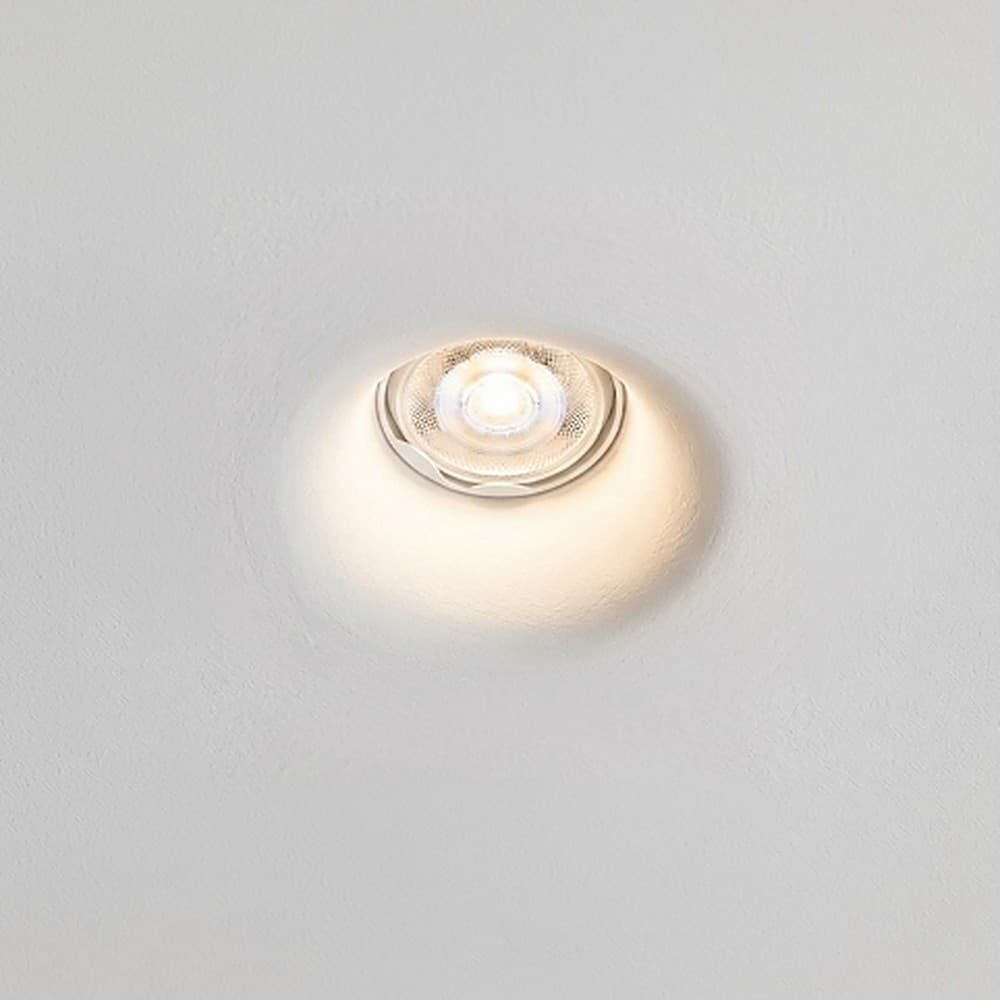
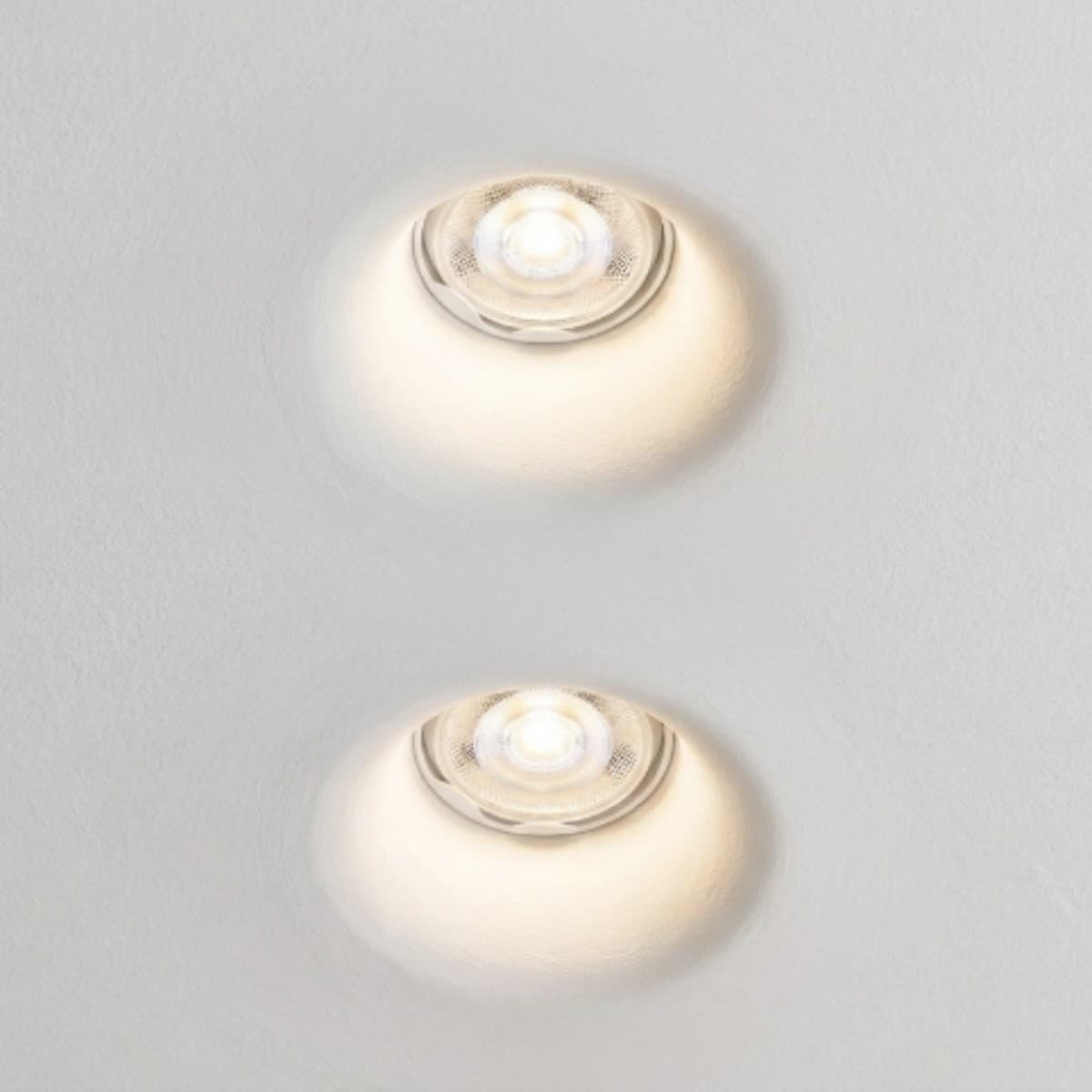
Avoid the grid trap. A uniform grid of downlights at equal spacing looks like a commercial office. Instead, position downlights based on what needs lighting: over seating areas, workspaces, corridors, and accent points. Leave darker zones between pools of light for depth and atmosphere. Four well-placed downlights beat eight evenly spaced ones.
Combining fixtures in one ceiling
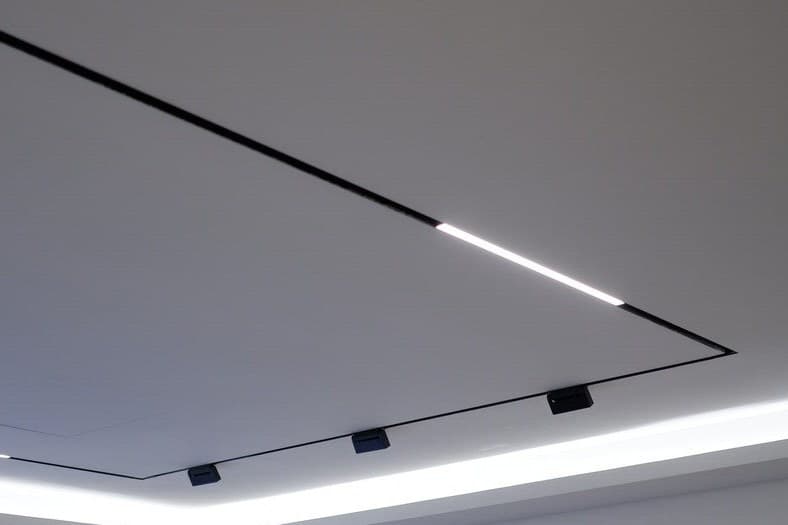
A false ceiling can accommodate recessed downlights, cove LED strips, a magnetic track, and even pendant drops, all in the same room. Layer them: cove lighting for ambient, downlights for general, spots or track for accent. Put each layer on a separate switch or dimmer so you can control the mood. This approach gives you a room that works at any time of day, for any activity.
Ceiling materials and finishes
Standard plasterboard is the default for residential false ceilings in Singapore. For cove lighting, the surface above the LED strip (the true ceiling or the inner face of the cove) should be smooth and white to maximise light reflection. Textured or dark ceilings absorb light and reduce the cove effect. If you're painting the ceiling, use a flat white finish. Glossy paint creates uneven reflections.
Coordinating with your contractor
Give your contractor the lighting layout before the false ceiling is built. Specify cutout positions and sizes for recessed downlights. Mark where LED strip drivers and track system drivers will go, as they need access points for future maintenance. Mark power point locations for all drivers and dimmers. The ceiling, electrical, and lighting trades need to work from the same plan.
Shop Recessed Downlights
Ready to order, shipped from our Singapore showroom.