Types of LED Strip: COB vs SMD, Tri-Colour, Tunable White and RGB
What each kind of LED strip looks like when it is on, what it needs to run, and which one suits a cove, a kitchen cabinet or the back of a TV.
Shopping for led strips? See prices and specs, or send us your floor plan.
Two choices: how it is built, and what colours it gives
Every LED strip comes down to two choices. The first is how the LEDs are packed: COB or SMD. That decides whether you see a smooth line of light or a row of dots. The second is what colours it can give: one fixed white, a choice of whites, or full colour. That decides what controller you need and what the strip can do for the room.
This guide covers both, then shows which strip suits which spot in a Singapore home.
COB vs SMD
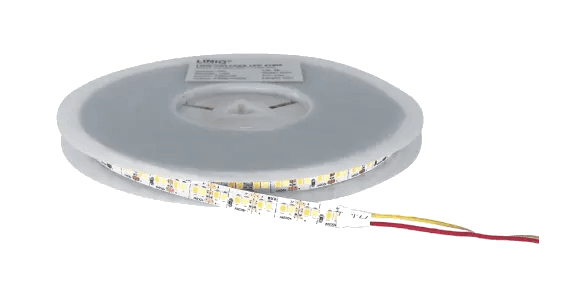
SMD (surface mounted device) is the classic strip. Small square LEDs sit along the strip with gaps between them, about 120 per metre on ours. Switched on, you see each one as a bright dot, and a shiny worktop or glossy cabinet reflects them as a row of spots.
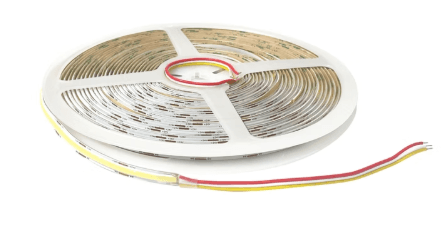
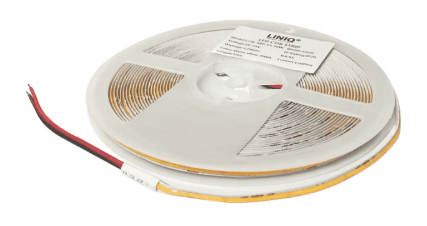
COB (chip on board) packs far more, much smaller LEDs together (480 to 840 per metre on ours) and covers them with one continuous yellow coating. Switched on, it reads as one smooth line with no dots, even with nothing covering it.
The dots only matter when you can see the strip. Inside a ceiling cove the strip is hidden and only the glow on the ceiling shows, so an SMD strip does the job for less. Put an SMD strip into an aluminium profile with a frosted diffuser and the dots blur into a line too. Where the strip or its reflection is in view (under a cabinet, along an open shelf, around a mirror), COB gives the cleaner result without a diffuser.
Brightness depends on the watts per metre, not on COB or SMD. Both kinds are made in low and high outputs.
Single colour
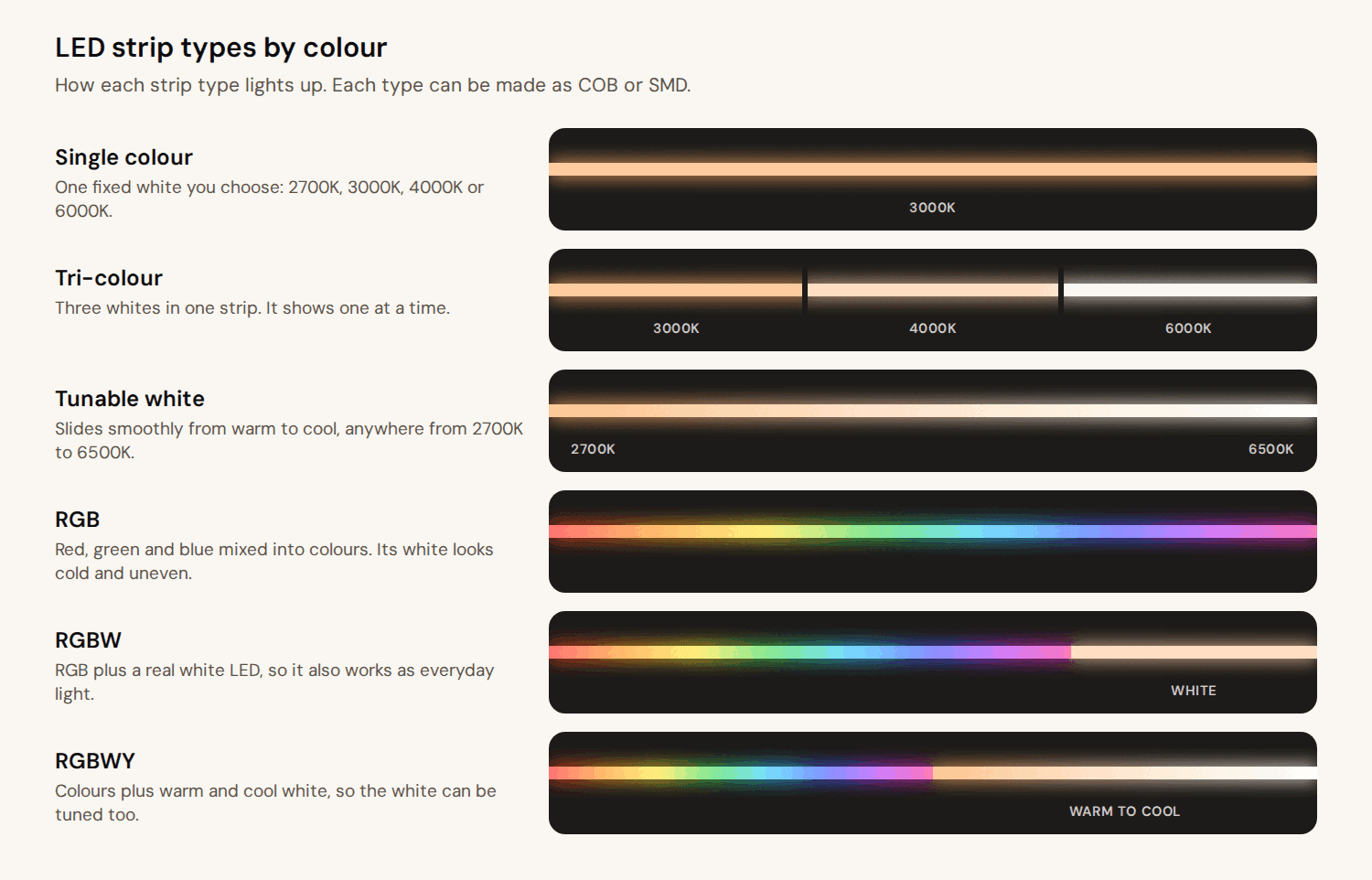
A single colour strip gives one fixed light and nothing else. Most people choose a white: 2700K or 3000K for living rooms and bedrooms, 4000K for kitchens and work areas, 6000K for utility spaces. It is also made in fixed colours such as red, blue or ice blue for decorative accents.
This is the simplest and lowest-cost strip. It runs on a standard 24V driver. To dim it, use a dimmable driver or add a dimmer module made for LED strips.
Tri-colour
A tri-colour strip holds three whites (warm, neutral and cool) in one strip and shows one at a time. It suits rooms that change use: warm in the evening, neutral or cool when you need to work or clean.
It is a good middle ground when you are not sure which white you want and do not want to install a smart system. Ask us how the version you are buying switches between its whites before you plan the wiring.
Tunable white
A tunable white strip (also called CCT) has two rows of white LEDs, one warm and one cool, and mixes them. Instead of three fixed steps you can set any white in between, for example anywhere from 2700K to 6500K.
It needs a CCT controller, usually run from a phone app, a remote or a smart home system. It is the best choice when you want the light to follow the day: cool and bright in the morning, warm and dim at night.
RGB, RGBW and RGBWY
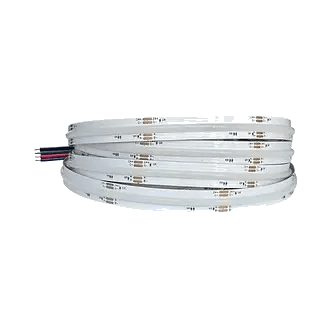
RGB strips mix red, green and blue LEDs to make almost any colour. They are fun behind a TV, in a games room or for parties. The weak point is white: RGB makes white by mixing the three colours, and the result looks cold and uneven. An RGB strip is not a good everyday light.
RGBW adds a dedicated white LED. You get the colours for mood and a proper white for daily use, from the same strip.
RGBWY adds a warm white channel as well, so the white itself can be set warmer or cooler. It is the widest range in one strip, and the one to pick if you want a single strip to do everything.
All three need a controller with the matching number of channels: an RGB controller for RGB, RGBW for RGBW, and so on. A controller with fewer channels than the strip leaves part of it unused.
Which strip goes where
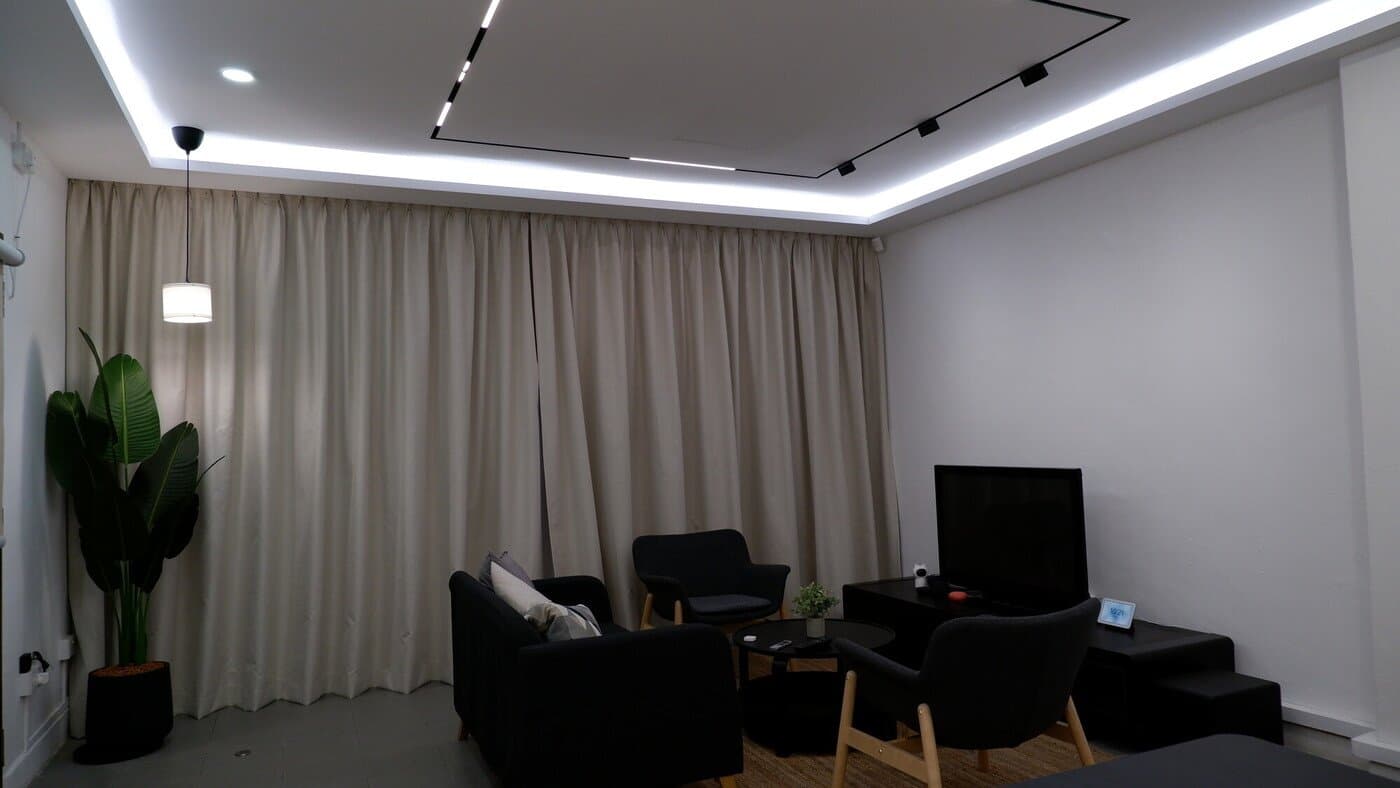
Ceiling cove in the living room or bedroom: SMD is fine because the strip is hidden. Use 3000K single colour, or tunable white if you want to change the mood.
Under kitchen cabinets: COB, so the worktop shows a clean line and no reflected dots. 4000K single colour is the usual choice.
Open shelves, display cabinets and wardrobes: COB, as the strip is often in view. Match the white to the room.
Behind the TV or a headboard: RGBW if you want colour, single colour 3000K if you only want a soft glow.
Bathroom mirror or vanity: COB at 4000K. Check the IP rating first: our strips are IP20, for dry indoor areas only, so wet areas need a strip rated for moisture.
Not sure: tri-colour lets you change your mind after it is installed.
Is a cove light the same as an LED strip?
Yes. A cove light is an LED strip placed inside a ledge or L-box in the false ceiling, so the strip is hidden and the light bounces off the ceiling. So the choice is not strip or cove. It is which strip goes into the cove, and everything above applies. Our cove lighting guide covers how the ledge is built and how deep it should be.
Frequently asked questions
Do all LED strips need a driver? Yes. Our strips run on 24V, so they need a 24V driver to convert from mains power. Size it with at least 20% spare capacity over the total wattage of the strip. Our LED strip installation guide shows how to work it out.
Can I cut an LED strip? Yes, but only at the marked cut points. Cutting anywhere else leaves the last section dead.
Is COB more expensive than SMD? A little, per metre. In a hidden cove that extra cost buys nothing you will see, so SMD is the better value there.
Can I control a single colour strip from my phone? Only if you add a smart driver or controller. The strip itself has no smarts. Tunable white and colour strips always need a controller.
Which strip is brightest? Compare the watts and lumens per metre on the product page, not the strip type.